Every Car Has A Story

Visitors often ask me what my favorite car in the museum is.

It's a difficult question because my answer changes depending on the day. Sometimes I'm drawn to a beautiful classic car. Other times it's a race car, a movie car, or one of our unusual microcars. But more often than not, my favorite vehicle is the one whose story I've been thinking about lately.

That's because the most interesting thing about an automobile isn't always the automobile itself.

Every car represents a moment in time. Every car was built to solve a problem, fulfill a dream, or meet a need. Long after the engineers, designers, and owners are gone, the vehicle remains as a physical reminder of the world that created it.

Three vehicles in the Tucson Auto Museum illustrate this perfectly. On the surface, they couldn't be more different. One is an early American automobile built when the industry was still in its infancy. One is a rare postwar sports car created by an ambitious dreamer. One is a tiny German microcar born from the hardships of postwar Europe.

Together, they tell a much larger story about the history of the automobile.

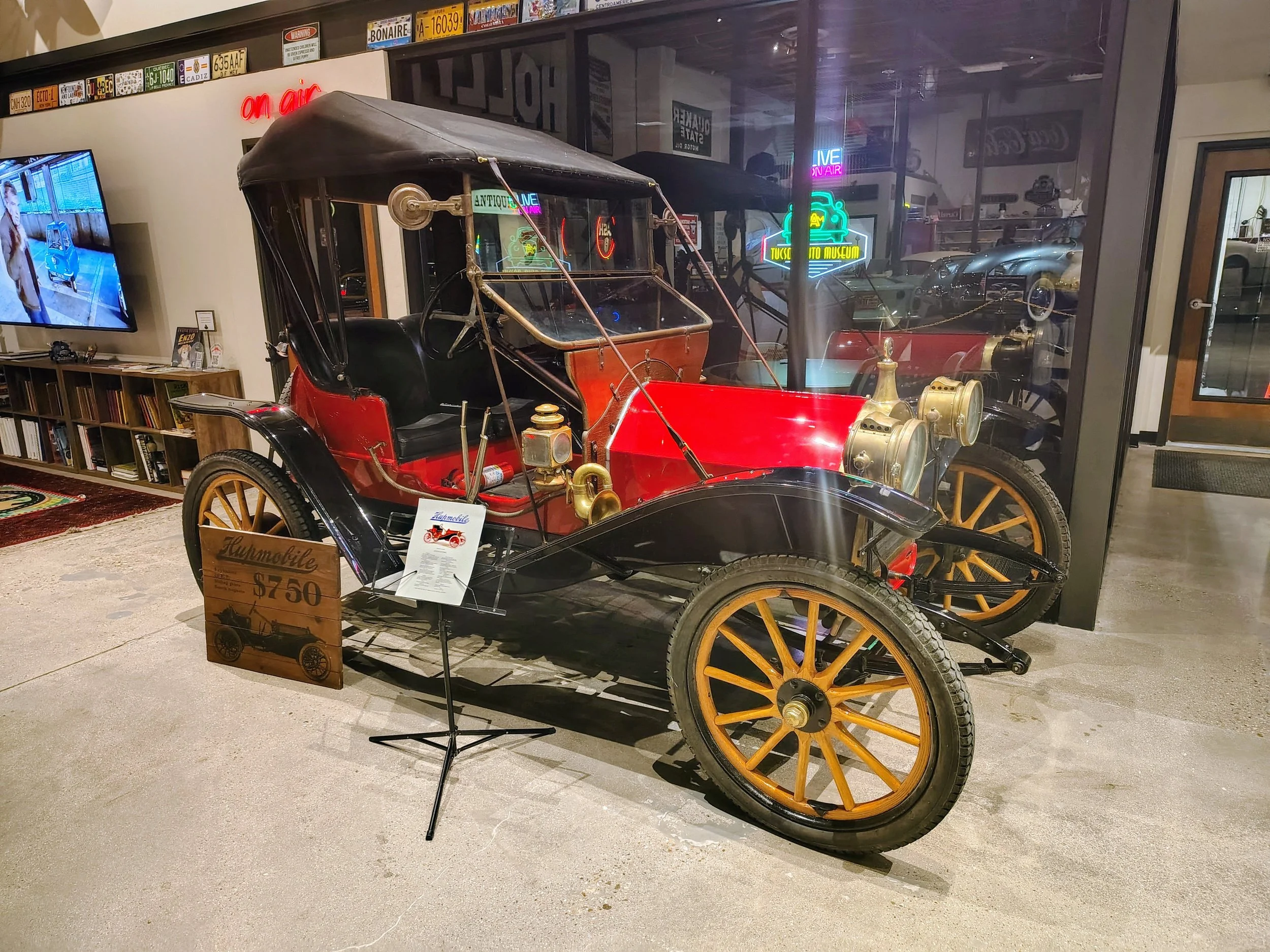
The 1910 Hupmobile: The Wild West of the Automobile

Today, it is easy to assume that the automobile was destined to become the dominant form of transportation. Looking back with more than a century of hindsight, the outcome seems obvious.

In 1910, however, nothing was certain.

America was still filled with horses, wagons, and dirt roads. Many rural communities had never seen an automobile. Gas stations were rare. Long-distance travel was difficult. Reliability was questionable. Some people believed electric vehicles would dominate the future. Others preferred steam-powered cars. Gasoline-powered automobiles were only one of several competing technologies.

Most people have heard of Henry Ford, but few realize that hundreds of automobile manufacturers once competed for customers. Nearly every month seemed to bring a new company promising a revolutionary design. Some survived for years. Many disappeared almost immediately.

The Hupmobile emerged from this chaotic environment.

Founded by Robert Hupp, the company focused on building practical, affordable automobiles for ordinary Americans. Unlike many competitors that chased luxury buyers, Hupp recognized that the future of the automobile depended on reaching the middle class.

The strategy worked. Hupmobile became one of the more successful independent manufacturers of its era, producing hundreds of thousands of vehicles before eventually succumbing to the economic pressures that wiped out many early automakers.

When visitors look at our 1910 Hupmobile, they are seeing much more than an antique automobile. They are seeing a survivor from a time when the future of transportation had not yet been decided. It represents the optimism, experimentation, and uncertainty of an entirely new industry.

The automobile revolution was not inevitable. Companies like Hupmobile helped make it happen.

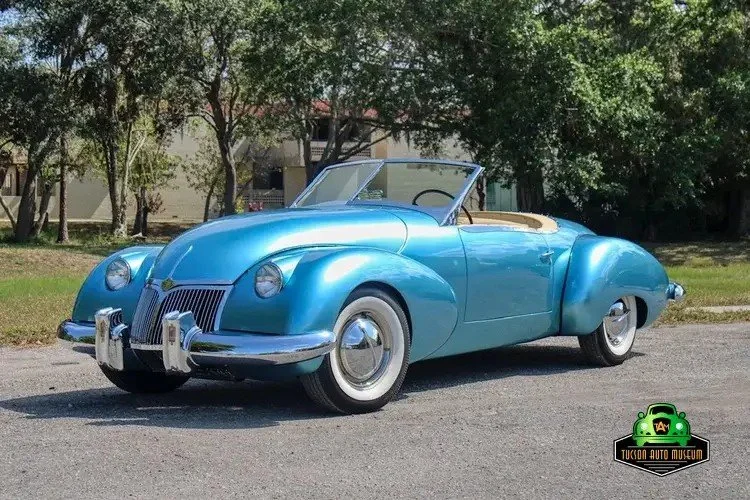
The 1948 Kurtis-Omohundro Comet: Chasing the American Dream

If the Hupmobile represents the birth of the automobile industry, the Kurtis-Omohundro Comet represents something very different: the extraordinary optimism of postwar America.

The years following World War II were unlike anything the country had experienced before. Millions of servicemen returned home. Families expanded. New suburbs appeared almost overnight. Businesses grew rapidly. The interstate highway system was still years away, but Americans were already embracing the automobile as a symbol of freedom and opportunity.

For entrepreneurs, it seemed like anything was possible.

The major manufacturers dominated the market, but they were not alone. Across the country, inventors, racers, engineers, and dreamers believed they could build something better. New automobile companies appeared with remarkable frequency. Some offered innovative engineering. Others promised futuristic styling. All were convinced they had discovered the next big thing.

Frank Kurtis was one of those dreamers.

Already famous for his race cars and engineering talent, Kurtis envisioned a sophisticated sports car that would combine performance, style, and exclusivity. The result was the Comet, a striking automobile that looked unlike anything Detroit was producing at the time.

Unfortunately, building automobiles is much easier to imagine than to accomplish. Designing a car is difficult. Manufacturing one in meaningful numbers is even harder. Countless independent automakers learned that lesson the hard way.

The Comet never achieved commercial success, making surviving examples extraordinarily rare today.

Yet failure is not the end of the story.

In many ways, the Comet symbolizes one of the most important aspects of American innovation: the willingness to try. The same spirit that created successful companies also produced countless ambitious projects that ultimately fell short. Their commercial failure does not make them any less fascinating.

Standing before the Comet, it is impossible not to admire the boldness of the vision. It reminds us that progress often begins with people willing to take risks.

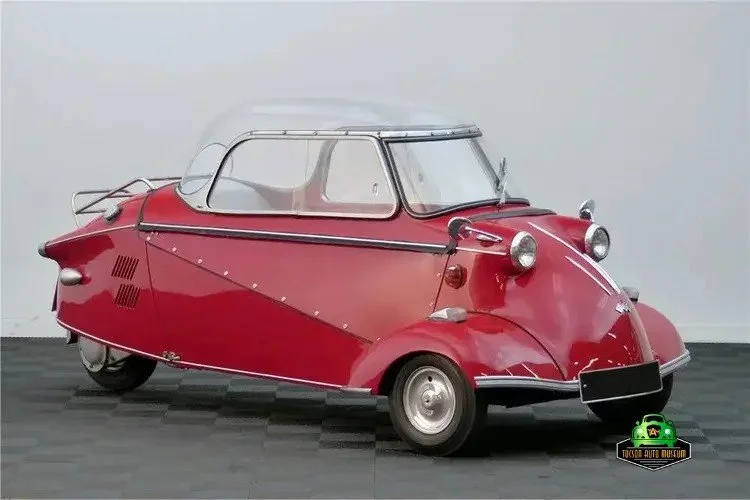
The Messerschmitt KR200: Innovation Through Necessity

The story of the Messerschmitt KR200 begins in a very different place.

While postwar America enjoyed unprecedented prosperity, much of Europe was struggling to rebuild. Cities had been damaged. Industries disrupted. Resources remained scarce. Fuel was expensive. Consumers needed transportation, but traditional automobiles were often beyond their financial reach.

Necessity forced innovation.

The company that produced the KR200 had previously built aircraft. After the war, restrictions limited Germany's ability to manufacture airplanes, forcing companies to search for new opportunities. The result was a generation of tiny, efficient vehicles designed to provide affordable transportation to ordinary citizens.

The KR200 was one of the most ingenious.

Its narrow body, tandem seating arrangement, lightweight construction, and aircraft-inspired canopy reflected the practical realities of the time. It was not designed to compete with large American automobiles. It was designed to help people get from one place to another using minimal fuel and materials.

To modern eyes, the KR200 often appears charming, quirky, or even humorous.

But its story is actually quite serious.

The KR200 represents resilience. It represents people rebuilding their lives after unimaginable hardship. It demonstrates how engineering can adapt when resources are limited and circumstances demand creative solutions.

In many ways, it embodies a lesson that remains relevant today: constraints often inspire innovation.

More Than Cars

At first glance, the Hupmobile, Comet, and Messerschmitt have very little in common.

They were built in different countries, for different customers, and under vastly different circumstances.

Yet each tells a story far larger than itself.

The Hupmobile tells the story of an industry being born.

The Comet tells the story of ambition and optimism in postwar America.

The Messerschmitt tells the story of recovery, adaptation, and survival.

That is what makes automobile museums special.

We preserve cars, but what we are really preserving are the stories behind them. The vehicles are simply the artifacts that carry those stories forward to future generations.

The next time you visit the Tucson Auto Museum, take a moment to look beyond the paint, chrome, and specifications.

Ask yourself what was happening in the world when that vehicle was built. What problem was it trying to solve? What dream was it trying to fulfill?

You may discover that the story behind the car is every bit as fascinating as the car itself.

Next
Next

Automobiles Through the Decades Part 6: 1960-1969, From Camelot to Woodstock: Hope, Heartbreak, and Horsepower