Automobiles Through the Decades Part 6: 1960-1969, From Camelot to Woodstock: Hope, Heartbreak, and Horsepower

The 1960s started right where the 1950s left off.  The country was riding that confidence and optimism into the new decade.  With Kennedy as the youngest elected president in history, the promise for the future looked bright. We were locked into a thrilling space race with the Soviets, and yet the terrifying shadow of a cold war was never far away.  But the emotional arc the country was headed toward was one no one could have imagined.  In ten years, the country would see more emotional and cultural upheaval than any time since the Civil War.

So, while Detroit ruled the road in America, something was stirring across the Atlantic.  European manufacturers were reimagining what a car could be: smaller and more exotic than what was rolling out of Detroit. With our young President at the wheel of a convertible, the open road felt like it belonged to a new generation—and Americans were noticing what the Europeans were selling. They kind of liked it.

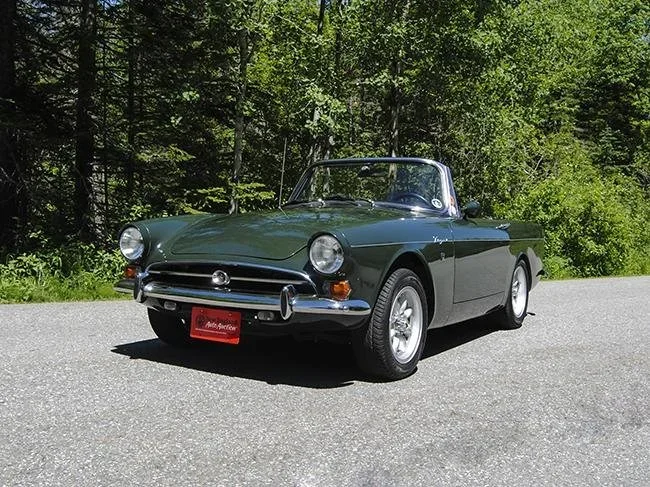
American car buyers in the early 1960s were not necessarily dissatisfied; they were curious about what European manufacturers were doing.  They were more educated and more traveled, and when they came home, they wanted what they experienced on vacation in their everyday lives.  They wanted to feel part of the “Jet Set” even if they were a suburban family.  Hollywood was always glamorizing the exotic, and nothing captured that exotic allure quite like James Bond.  When 007 slid behind the wheel of an Aston Martin in Goldfinger, every American man wanted to be him and every American woman wanted to be seen with him. Automobiles changed from transportation to an attitude.  Even TAM has a Bond connection—our 1967 Sunbeam Tiger shares its DNA with the Sunbeam that 007 drove in Dr. No.

Americans’ newfound fascination with exotic European vehicles had a devastating impact on Detroit’s market share.   In one decade, it went from owning 93% of US car sales to 81%.  A number that would have been unthinkable at the beginning of the decade.  But the reality is a little more nuanced.  Detroit did not totally ignore this invasion.  GM introduced the Corvair in 1960 and it tried the hardest to be European (AKA the VW Beetle). The Corvair was a rear-engine, air-cooled vehicle, an attempt to be European.  Chrysler responded with the Valiant, a more conservative but practical and reliable option.  Ford’s first entrance was the Falcon.  It was compact, simple, and economical, a direct response to the imports.  An interesting side note: the Falcon was the platform that spawned the Mustang.  So, Ford had the distinction of not only copying the Europeans but also creating a new class of vehicle, the pony car.  In the background of all this, a young consumer advocate named Ralph Nader was taking a close look at one of the Detroit responses, and he did not like what he saw.

We mentioned the lack of seat belts in vehicles last month. By 1965, automobile accidents were the leading cause of death for Americans under 44.  Without seat belts, passengers were projectiles in a crash.  Steering columns were like spears pointed at the driver’s chest; dashboards were hard metal with no padding, and windshields shattered into razor-sharp shards.  Factor in door latches that failed regularly in crashes.  This was not bad luck.  It was bad design.  Enter Ralph Nader. He was a Harvard Law graduate who had been writing and researching automobile safety since the 1950s.  He became aware of a growing number of lawsuits involving Corvair rollovers and spinouts.   Turns out the early Corvairs became controversial because their handling characteristic caused sudden and dramatic oversteer; the rear of the car would snap out without warning at highway speeds.   The accidents were strikingly similar, and he connected the dots.  In 1965, Nader’s book Unsafe at Any Speed: The Designed-In Dangers of the American Automobile was his indictment of the entire automobile industry, but the Corvair was featured in the first chapter of the book.  To say GM was not happy is an understatement, and to say their failed attempt to discredit him backfired is an even bigger understatement.  The result was a public apology before the US Senate and a monetary settlement that Nader used to fund further consumer advocacy. The final irony? By the time the book hit the shelves, the Corvair had been fixed, but it was far too late for that to matter.

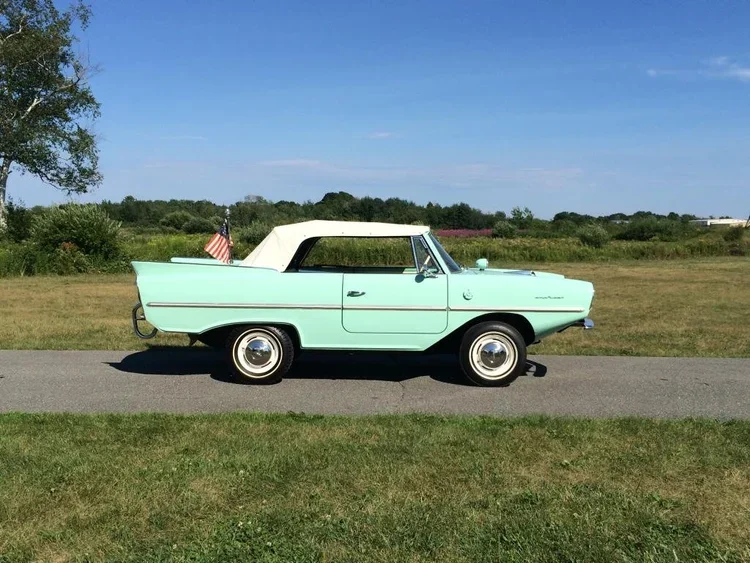
Another major force in the 1960s was Lyndon Baines Johnson.  Tragically, he came to power with the assassination of JFK in November of 1963 and was sworn in on Air Force One hours after Kennedy was killed.  He was reelected in 1964 by one of the biggest landslides in presidential history.  This gave him an enormous mandate to push through his Great Society legislation.  It touched every aspect of American life: healthcare, civil rights, education, environment, arts and culture, and consumer protection.  All told, 226 significant pieces of legislation.  Of this legislation, the most significant to the automobile industry was the National Traffic and Motor Vehicle Safety Act.  For the first time in history, the federal government could dictate how cars were to be designed and built. It fundamentally shifted safety responsibility from drivers to manufacturers.  The law led to federal standards requiring seat belts, collapsible steering columns, padded dashboards, head restraints, and shatterproof windshields, among other critical safety features.  What is TAM’s tie to LBJ besides his legislation?  Well, it is one car in particular, the 1967 Amphicar, designed to operate on water as well as on land.   LBJ owned one and loved to terrorize his guests by driving it around his ranch and then claiming the brakes failed as he headed towards the lake.  But LBJ was not the only president to own an Amphicar—Jimmy Carter owned one as did John Lennon and Dan Aykroyd.  So, two presidents, one Beatle and a Ghostbuster, pretty famous owners.  The cruel irony is that the safety and emissions legislation LBJ signed made it difficult for small vehicle makers like the Amphicar to remain viable in the US.  The company, unable to meet the new standards, closed in 1968.

By the early 1960s, LA smog was so bad it was a genuine public health emergency.  LA sits in a coastal basin surrounded on three sides by mountains that form a natural wall.  Ocean breezes push air inland.  Normally, warm air would rise and carry the pollutants up and out of the basin.  But in LA, a warm layer of air sits on top of the cooler air near the ground, trapping the pollution in the basin.  Add sunlight, and chemical reactions occur creating photochemical smog, that brownish-yellow haze.  Because of a unique set of geographical and environmental conditions, California could not wait for the federal government, and in 1966 enacted the first exhaust controls for automobiles.  California became the testing ground for the rest of the nation.  The federal government followed in 1968 with national standards requiring emissions controls for every car in the nation.  More precisely, every car sold in the nation.  This meant that the European manufacturers had to meet the same emission regulations as well.  Or as we like to say, cars built before 1966 have all the emissions; those built later have some of the emissions.

The decade began with confidence and optimism, a New Frontier full of promise. But in a few short years the emotional arc would begin to turn dark.  It began with the assassination of JFK in Dallas.  The promise of LBJ’s Great Society was so transformative, but the painful reality of the civil rights struggle and the long hot summers that followed shattered that illusion. The simple goal of the Vietnam War was never the reality, and it cost a president his job and divided the nation.  Then 1968 arrived, and the bottom fell out.  But through it all America managed to do the impossible and put a man on the moon.  And 400,000 people found their way to a muddy field in New York trying to find something to believe in.

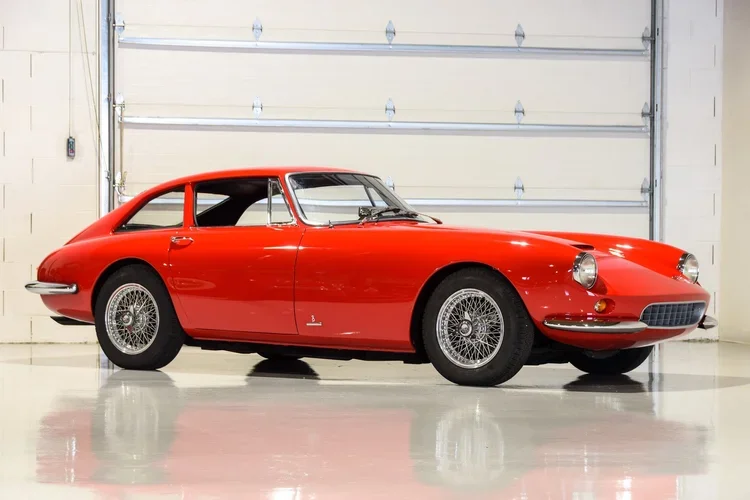
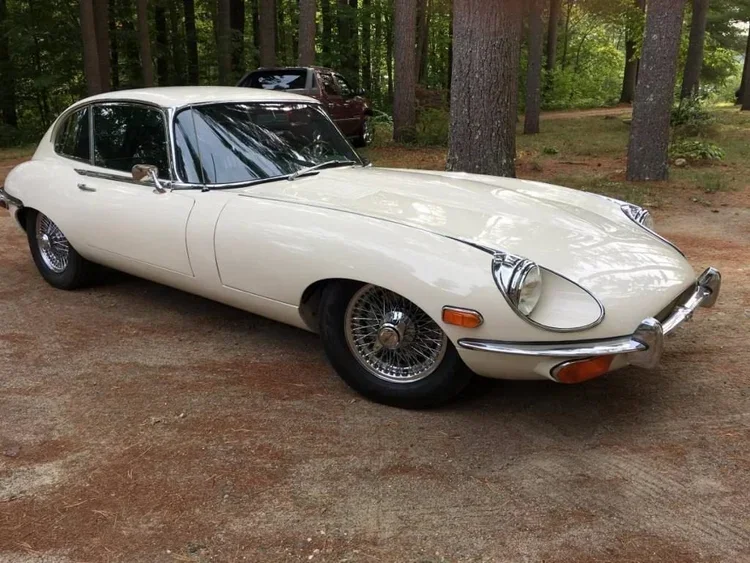
So, when you visit the Tucson Auto Museum and stand next to the cars from the 1960s, the Jaguar E-Type, the Amphicar, the Sunbeam Tiger, the Apollo 5000 GT, remember what was happening when they were built.  They are more than machines. They represent the hopes and dreams of the people who designed them, who built them, who drove them.  They reflect one of the most extraordinary decades in American history.  A decade that began in the fabled court of Camelot came to a close in a field at Woodstock and with men leaving footprints on the moon.

Next
Next

Automobiles Through the Decades Part 5: 1950-1959, All That Chrome and No Seatbelts