

Automobiles through the Decades Part 3: 1930 to 1939 When Crisis Sparked Creativity
The 1930s remain an age of automotive contradictions and innovation. Known as the Depression Era, this period was deeply scarred by economic collapse and widespread hardship, yet it nevertheless witnessed remarkable achievements in automotive engineering and design. Technical innovations paired with the elegance of Art Deco styling produced some of the era's most distinctive and memorable vehicles. Our collection includes remarkable examples that tell this story of resilience, ingenuity, and the relentless pursuit of progress against overwhelming odds.
The aftermath of the 1929 stock market crash changed the Auto industry forever. Sales, which peaked at approximately 5.3 million vehicles in 1929, plummeted dramatically. Production reached its lowest point in 1932 with only 1.3 million vehicles manufactured. Even by decade's end in 1939, sales had recovered to just 3.6 million vehicles. It would take a full twenty years for the industry to return to its pre-Depression sales levels.
The human cost was even more staggering. Ford Motor Company's workforce shrank from 128,000 employees in spring 1929 to just 37,000 by August 1931. Many iconic manufacturers, both large and small, did not survive. Notable brands that ceased production during the decade include Franklin (1934), Auburn-Cord-Duesenberg (1937), Pierce-Arrow (1938), and Stutz (1939). Only the strongest companies, General Motors, Ford, Chrysler, Hudson, Nash-Kelvinator, Packard, and Studebaker managed to endure. Survival required decisive action. As an example, General Motors responded swiftly by mothballing plants, reducing production, and lowering Chevrolet's breakeven point by a third. The company aggressively cut prices, and with their diversified brand strategy, GM was able to remain profitable every year throughout the Depression. Those companies with weaker balance sheets simply vanished.
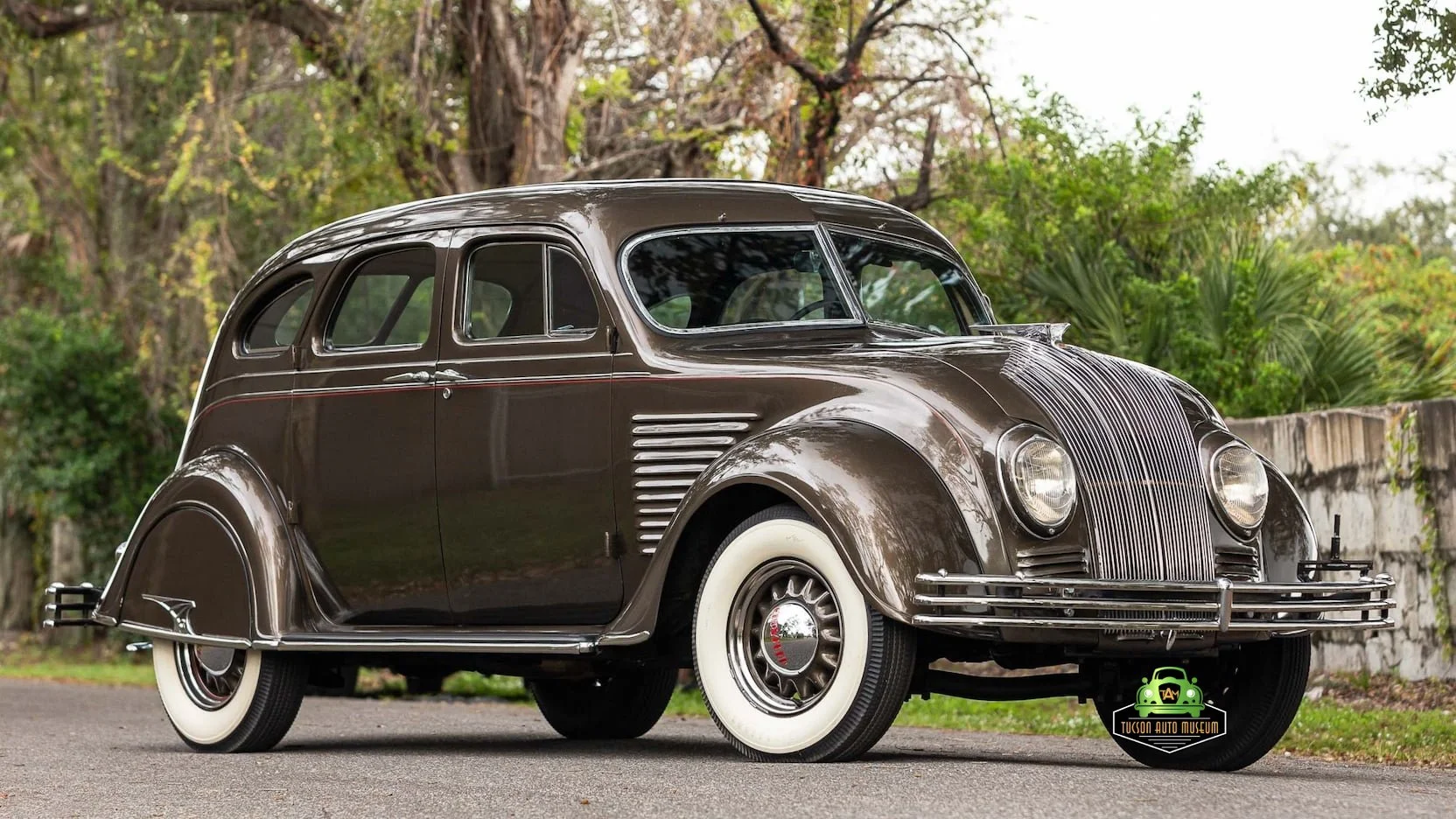
Yet amid this devastation, the decade opened with traditional automotive design still dominant, only to witness its complete transformation by 1939. Perhaps no vehicle in our collection better illustrates this shift than the 1934 Chrysler Airflow. When Chrysler engineers began using aircraft wind tunnels to test automobile designs, they made a startling discovery: most cars were more aerodynamic driving backwards than forwards! The Airflow's revolutionary streamlined design reduced drag by nearly 50 percent, improved fuel economy, and increased top speeds. The design also experimented with unibody construction that would not become mainstream for another 30 years. Also Ride and handling improved dramatically as engineers moved the engine and passengers forward, creating better weight distribution and more even spring rates. While the public initially rejected its radical appearance, leading to poor sales, the Airflow established aerodynamic principles that every modern car employs today.
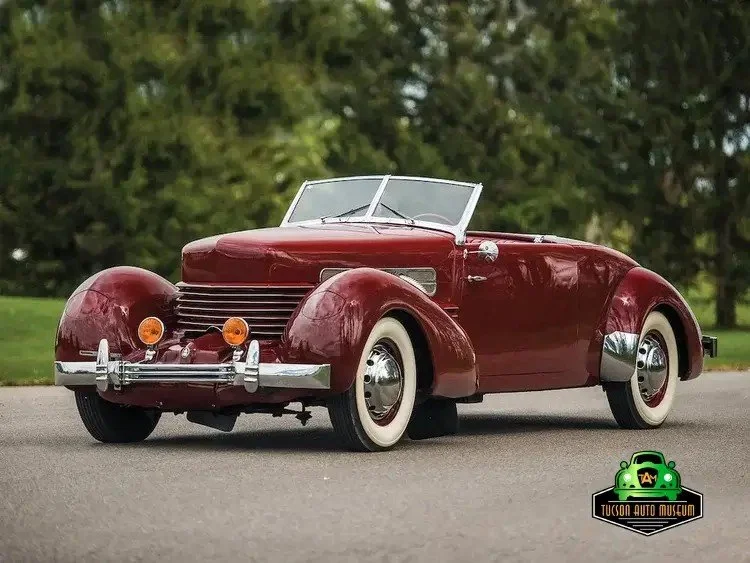
Our 1937 Cord 812 "Sportsman" Convertible Coupe represents another quantum leap forward. It was such a sensation at the 1935 NY Auto Show, that attendees stood on the bumpers of nearby cars to get a look. The Cord brought front-wheel drive to American luxury automobiles, a configuration that improved traction and handling while allowing designers to create lower, sleeker profiles without a driveshaft tunnel intruding into the passenger compartment. The Cord also introduced concealed retractable headlights, operated by elegant dashboard-mounted cranks—a feature that wouldn't become commonplace until the 1960s. With its coffin-nose design and art deco styling, the Cord looked like it belonged in 1950, not 1937.
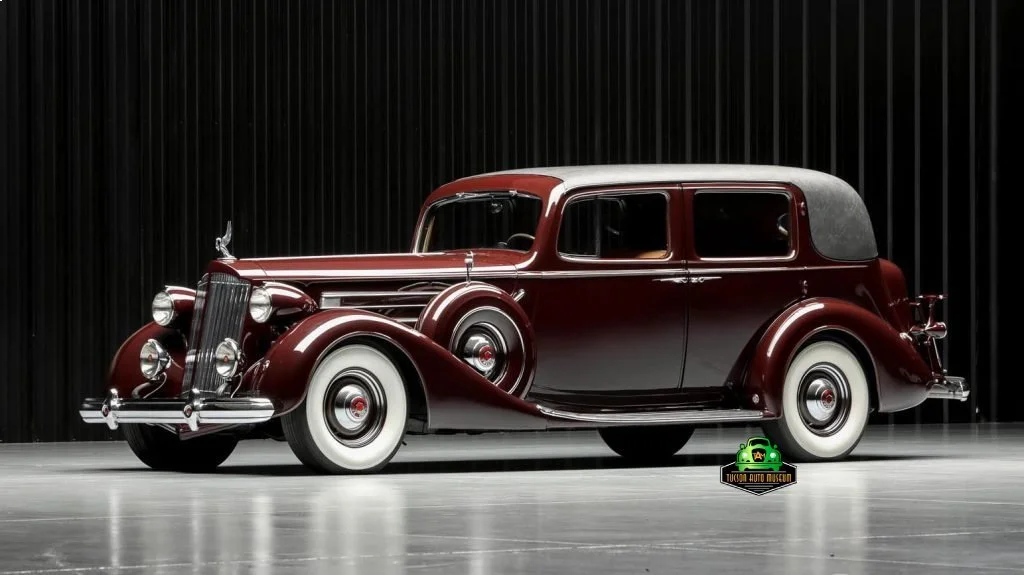
Despite economic collapse, the Depression spurred manufacturers to create their most ambitious vehicles. If you were going to survive, you either built basic transportation for the masses or ultra-luxury automobiles for those still wealthy enough to afford them. The middle ground vanished. The 1937 Packard Twelve 1507 Formal Sedan exemplifies this approach perfectly. Packard's V12 engine delivered 175 horsepower with remarkable smoothness, representing the pinnacle of American luxury engineering. The company's famous slogan "Ask the man who owns one", suggested a level of satisfaction that transcended mere transportation. These were the cars of presidents, movie moguls, titans of business, the elite, and the notorious. The one in our was ordered new by comedian Jack Benny! At a time when most Americans struggled to afford necessities, Packard proved there was still a market for excellence without compromise.
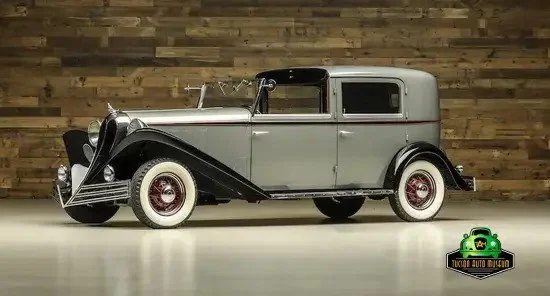
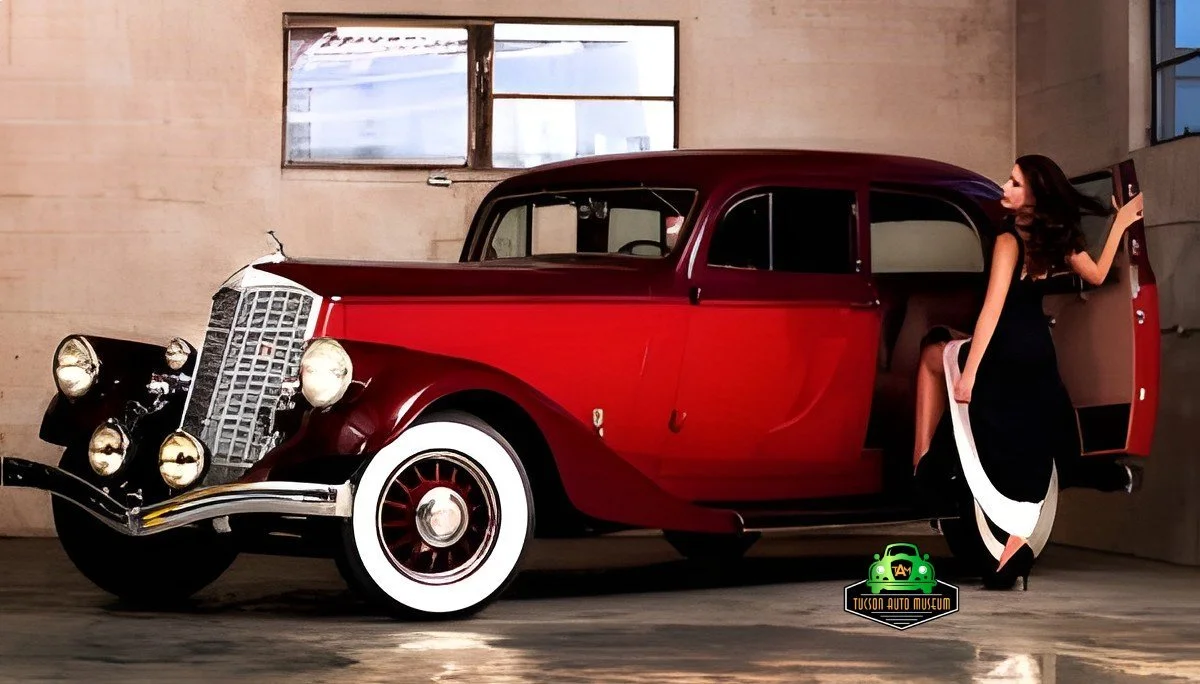
The 1930s saw automotive design emerge as a distinct artistic discipline. Our 1934 Brewster-Ford Town Car represents coachbuilding's final golden age, when custom bodies were still crafted for discerning clients. While the 1934 Pierce Arrow Model 836A showcased integrated fender-mounted headlights that became a Pierce Arrow signature, blending functionality with distinctive style.
Beyond the showroom glamour, the 1930s introduced fundamental engineering improvements that made cars safer, more reliable, and more enjoyable to drive. Hydraulic brakes replaced mechanical linkages, providing more reliable and powerful stopping ability crucial as engines grew more powerful and speeds increased. Independent front suspension abandoned rigid front axles, allowing each wheel to respond independently to road irregularities. This dramatically improved both ride comfort and handling, making cars more controllable at higher speeds while providing passengers with a smoother journey.
All-steel body construction replaced wood-framed bodies, improving safety, durability, and enabling the complex curved designs that defined the era's aesthetic. This transition required revolutionary changes in manufacturing. Steel companies developed massive hydraulic presses and hardened dies capable of stamping thousands of parts, while Edward G. Budd's "shotweld" technique solved the challenge of joining steel without damaging its properties. Though tooling required high upfront investment, the per-unit cost became remarkably low at volume. The results were transformative: all-steel bodies were only 10 percent heavier than wooden cars but far safer and more durable. Steel's malleability enabled aerodynamic designs impossible with wood, while one press operator could now produce what previously required multiple skilled craftsmen.
Synchromesh transmissions revolutionized the driving experience. In earlier transmissions, shifting meant forcing gears spinning at different speeds to mesh, causing grinding and wear. Drivers had to "double clutch", pressing the clutch, shifting to neutral, releasing the clutch to match speeds, then clutching again to complete the shift. This required skill and practice. Synchromesh added synchronizers that used friction to match gear speeds automatically before engagement. Drivers could now simply press the clutch once and shift smoothly. What had been a skillful art became a simple action, democratizing the automobile for everyone.
The 1930s automotive story is ultimately one of human determination in the face of overwhelming adversity. In stark contrast to the prosperity of the Roaring Twenties, this decade brought widespread hardship, environmental disasters, and economic collapse. Yet faced with catastrophe, the engineers and designers who survived didn't retreat, they innovated with unprecedented creativity. The streamlined bodies, advanced suspensions, and powerful engines developed during this decade laid the foundation for modern automotive design. As this dramatic transformation reshaped the industry and a new light has shined on our question
“Did society shape the car or did the car shape society?” further complicating its answer. The Depression forced a brutal Darwinian selection: manufacturers either adapted quickly or disappeared. Those who survived did so by combining ruthless business decisions with inspired engineering and design.
As the decade ended, however, the innovations developed to survive the Depression would take on new significance. With enormous threats looming in the mid-1930s and war spreading throughout Europe and Asia by decade's end, the federal government began preparing for potential conflict. Roosevelt launched a limited preparedness campaign and in 1938 Congress authorized, the Defense Plant Corporation, which had the task of expanding production capabilities for military equipment. Companies began producing war materiel for European countries and the very manufacturing capabilities that had been refined during the Depression, the massive hydraulic presses, the precision stamping dies, the efficient assembly line techniques, were being eyed for an entirely different kind of production. The automotive industry's hard-won expertise in mass-producing complex steel structures would soon prove valuable in ways no one had anticipated when the decade began.
Our collection captures this pivotal moment when automobiles transformed from mechanical conveniences into sophisticated machines that balanced performance, safety, comfort, and beauty. The Depression-era cars in our museum aren't just survivors of a difficult time; they're testaments to what human ingenuity can achieve even in the darkest circumstances. They represent both the casualties of economic collapse (Pierce-Arrow, Auburn-Cord-Duesenberg) and the triumph of companies that emerged stronger through adaptation.
Visit us to see these remarkable machines up close and experience the decade that changed automotive history forever. And join us next month when we explore the 1940’s and their impact on the Automotive industry.